Free support 24/7


Free support 24/7

A Merchant's Guide to Recovering Lost Sales and Converting Hesitant Visitors into Actual Buyers. We reveal the technical and psychological secrets to retargeting abandoned carts and how to design irresistible email and WhatsApp campaigns that bring customers back to checkout in no time.
1. Analyzing the "Abandonment Moment": Why Do Customers Leave Their Items?
Before you start chasing customers, you need to understand why they abandoned their carts in the first place. More often than not, it's not a lack of desire to buy, but rather an unpleasant surprise at the checkout page, such as unexpected shipping fees, complicated checkout steps, or even a distracted phone call. The "easy" merchant analyzes this moment precisely; if carts are consistently abandoned at the shipping stage, it means your shipping price is too high. Identifying the reason is half the battle, because you'll build your win-back message based on the customer's frustration at that moment.
2. Golden Timing: The 60-Minute Rule for Customer Recovery
In the world of e-commerce, time is the enemy. Studies have shown that the highest rate of cart recovery occurs when the first reminder message is sent within the first hour of the cart being abandoned. Why? Because the customer's desire for the product is still at its peak, and they haven't yet switched to the competitor. If you delay until the next day, their adrenaline may have subsided, and they might have spent their budget elsewhere. The "Sahil" strategy relies on automation, starting with a gentle reminder message after 30 minutes, followed by a stronger one after 24 hours, and then a "last chance" message after 48 hours.
3. The Magic of WhatsApp in 2026: Direct Reach That Can't Be Ignored
While email inboxes are overflowing with hundreds of unwanted messages, WhatsApp remains king in the Arab region with an open rate of up to 98%. Cart recovery via WhatsApp isn't just about sending a link; it's about a conversation. Send a friendly message like, "Hi [Name], we noticed you forgot some nice items in your cart. Did you have any trouble with checkout?" This breaks down the psychological barrier and makes the customer feel that there are "humans" who care about them behind the screen, not just a software machine. This motivates them to reply or return to complete the purchase immediately.
4. The Clever "Bribe": When and How to Offer a Discount to Close the Purchase?
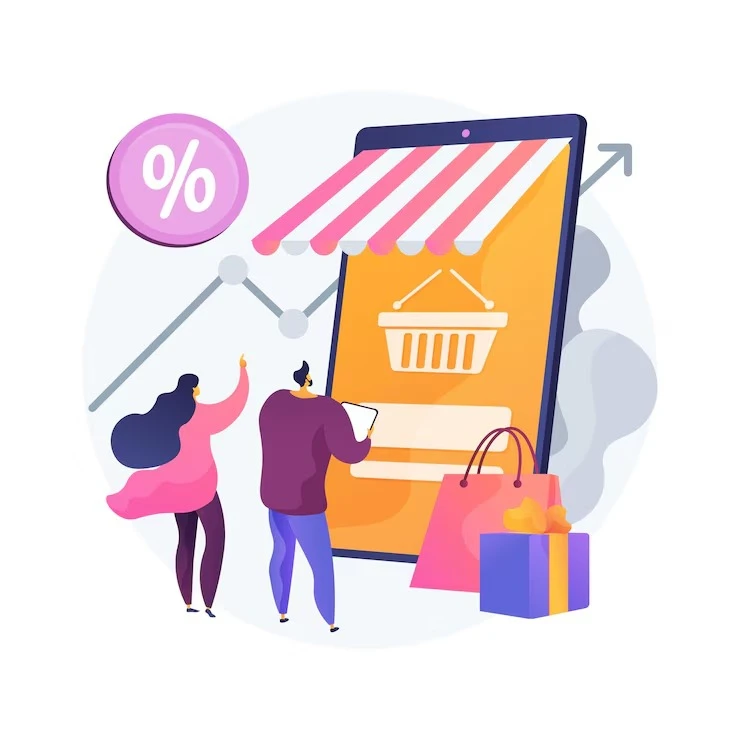
The biggest mistake merchants make is offering a discount in the first reminder message. This teaches the customer "cunning," as they will always leave their cart waiting for the discount! At "Sahil," we recommend that the first message be a "reminder only" (the customer might genuinely have forgotten). If they don't respond, the second message (after 24 hours) is the perfect opportunity to offer an "incentive," such as free shipping or a 10% discount that expires in just two hours. Using the "scarcity of time" with a discount is the most powerful motivator to push a hesitant customer to make the final purchase decision without much deliberation.
5. Remove Technical Obstacles: Make Returning Easier Than Running Away
When sending a refund message, don't redirect the customer to the store's homepage to search again; this guarantees failure. The link in the message should contain what we call a "Magic Link" that takes the customer directly to the checkout page with the products they previously selected in their cart. Every click you save the customer increases the likelihood of them buying by 20%. The goal is to make the return and checkout process take no more than 15 seconds, making the customer feel that the store understands them and makes their life easier.
6. The Power of Social Proof in Refund Messages
Sometimes, a customer leaves their cart because they have doubts about the product's quality at the last minute. To dispel these doubts, use reviews from real customers who bought the same product in your second or third refund message. Say something like, "Fahad and Sarah bought this product last week and gave it a 5-star rating!" When a customer sees others happy with the product they abandoned, their fear of missing out (FOMO) shifts from a fear of losing money to a fear of missing out on a great product that everyone praised.

7. A/B Testing: Never stop improving.
Recovering abandoned carts is a continuous improvement process, not a one-time fix. You must test: Which headlines get people to open the message more often? Do messages with emojis work better? Do customers prefer free shipping or direct discounts? A smart merchant monitors their dashboard weekly; if they find that a particular strategy is only recovering 10%, they change the text or timing until they reach the target 30%. The data dictates, and a smart merchant listens to what the numbers tell them.

نكشف لك الاستراتيجيات المالية واللوجستية التي تضمن لك تحقيق أرباح حقيقية وكيف تحسب هوامش ربحك بذكاء
How to choose a shipping company that boosts customer loyalty and ensures your products arrive safely and quickly


You can create your store easily